
A few days ago, I was at the Nithya Kalyana Perumal temple in Thiruvidanthai. It was 5:45 in the morning. The light was soft and unsure, that brief window when the night has not fully left and the day has not yet arrived. The moon was still visible, about five days before it would become full, carrying most of its brightness as it hung low in the morning sky.
Once every year, the idols here remain covered for nearly a month. On Ekadashi, the screen is removed, and the deity is brought out again. This year, that day fell on 30 December. For devotees, it is a deeply significant moment.
What caught me off guard was the number of people. There must have been hundreds already waiting. Some had arrived much earlier. The air carried a calm expectancy. People stood quietly, eyes fixed on the closed gates.
Even before the gates opened, something stood out.
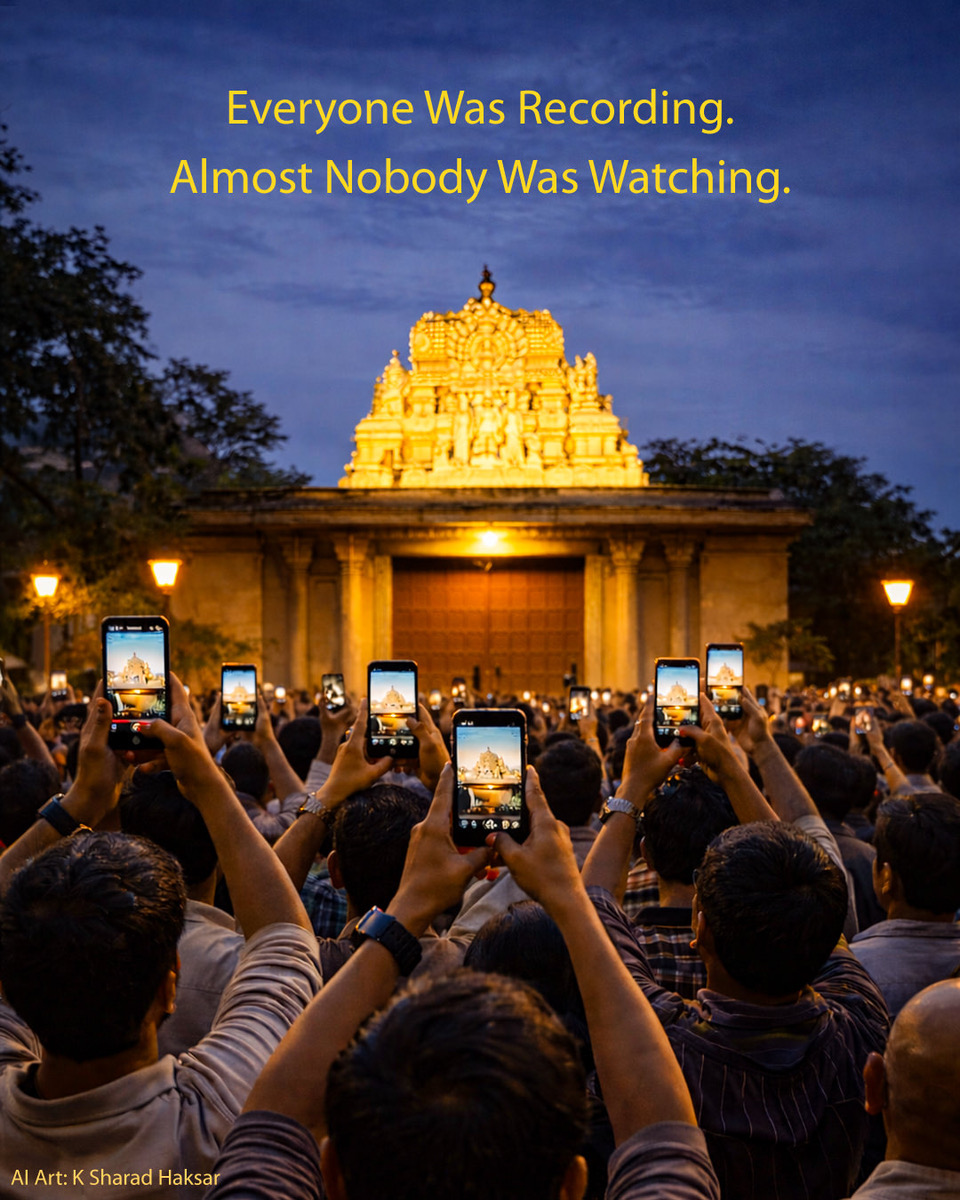
Almost every hand was already raised, holding a mobile phone.
There were no camera clicks. No shutter sounds. Just glowing screens. Video mode. Everyone recording. Arms stretched out, phones held high, waiting for the first glimpse.
Very few were actually looking directly.
Standing there, I felt an odd emptiness. Not because people were missing, but because attention was missing. Bodies were present, but awareness had drifted elsewhere. To WhatsApp groups. To Instagram stories. To people who were not there.
Watching this, I realised how much of the moment was slipping away.
When you are fully present, you are not thinking about who will see this later. You are not deciding where it will be shared. You are simply there. Breath steady. Senses open.
That morning, many had already stepped out of the experience without moving an inch.
As a dowser, I notice small shifts that most people overlook. Sacred spaces carry a certain charge, especially during rituals like this. That charge becomes steadier when people arrive quietly and pay attention. It thins out when attention is pulled in many directions.
Watching through a phone changes how the body reacts. The mind moves into handling mode. You begin managing the scene instead of letting it reach you. You turn into an observer of a screen rather than a participant in the ritual.
Research in cognitive science points to this as well. When we film instead of observing, memory settles less deeply. The brain stays occupied with framing and adjusting. The experience does not sink in the same way.
From a spiritual point of view, the difference is even clearer.
A ritual is not meant to be stored. It is meant to be received. The chants, the timing, and the shared quiet all work on you only if you allow them to. Energy may come through a screen, but it carries far less weight than when you are physically there.
You can watch the recording later, but what was available at that time cannot be fully brought back.
I did not take my phone out. I never do.
I stood there quietly. I watched with my eyes. I stayed with my breath. I let the moment pass through me instead of trying to hold it.
It lasted only a few minutes. But those minutes stayed.
I came back without a video. Without a photograph. But with something that sat with me long after.
A quiet fullness that does not need to be shared.
Presence cannot be forwarded. It cannot be replayed. It only exists when you choose to stay.
And in places like temples, that is where the real blessing lives.
K Sharad Haksar
Dowser | Photographer | Creative Director
#KSharadHaksar #Dowser #Dowsing #Spirituality #Temple